

FROM ARTIFICIAL INTELLIGENCE TO NHI: THE FORCES SHAPING SOUTH AFRICA’S HEALTHCARE IN 2026
Johannesburg, South Africa: as we move towards 2026, South Africa’s healthcare system continues to evolve under the combined pressures of rising costs, workforce challenges, and growing patient needs. New developments are emerging, including the local manufacturing of medicines, the rollout of new treatment options, and further progress toward the implementation of the National Health Insurance (NHI).
Understanding these changes is essential for the public to navigate a healthcare system that is advancing in capability but still contending with great inequalities.
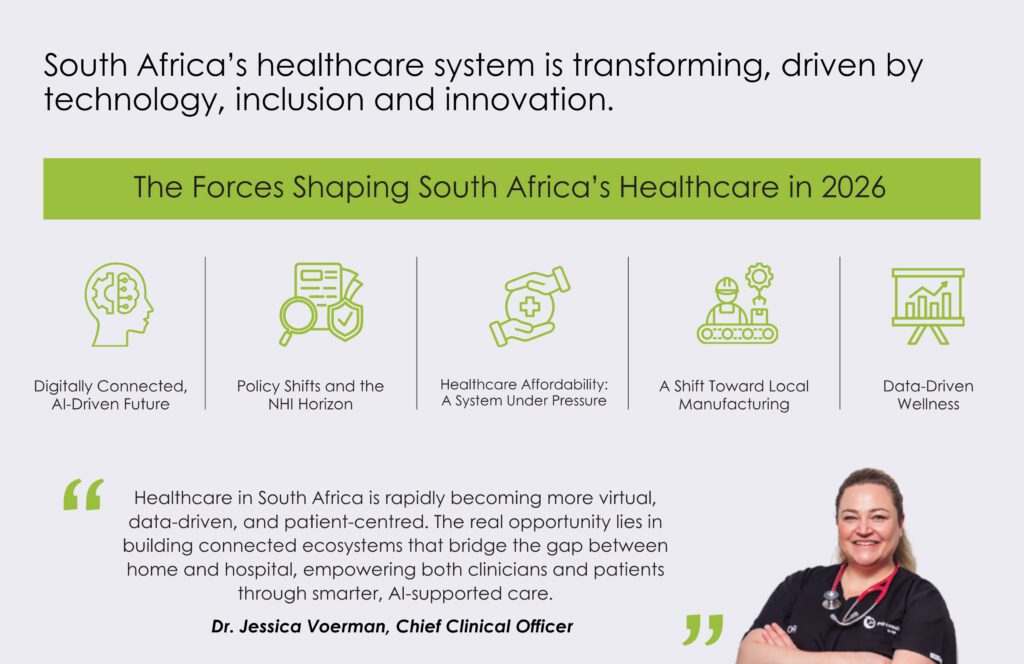
5 KEY HEALTHCARE FACTORS TO KEEP AN EYE ON IN 2026
1. A DIGITALLY CONNECTED, AI-DRIVEN FUTURE
Healthcare in 2026 is increasingly virtual, data-driven, and patient-centred. Digital health innovation is rapidly transforming care delivery in South Africa, with the market for AI in healthcare valued at US $15.3 million in 2023 and expected to grow at a 33.6%. According to the Future Health Index, approximately 61% of South African healthcare leaders are already using AI for treatment planning, 60% for hospital monitoring, and 60% for preventative care, higher than global averages.
This shift is not just about telemedicine, it’s about building connected ecosystems that allow continuous, home-based monitoring and smarter decision-making through data. However, digital adoption is not without challenges. Many public facilities still rely on improvised systems such as WhatsApp for referrals, underscoring the urgent need for improved digital infrastructure and interoperable health information systems.
The AI opportunity is immense: South Africa has just one radiologist per 100 000 people, compared to around 13 in Europe. The growing use of AI imaging tools and virtual triage systems could help close this critical workforce gap while improving diagnostic turnaround times.
2. POLICY SHIFTS AND THE NHI HORIZON
South Africa’s public health system continues to struggle with staff shortages, infrastructure decay, and uneven service delivery despite increased government spending. The rollout of the National Health Insurance (NHI) has reached a critical implementation phase, following the signing of the NHI Bill in 2024 despite ongoing resistance.
Bridging the gap between public and private sectors, strengthening partnerships, and improving accountability will be essential to achieving the NHI’s vision of universal, equitable access.
3. HEALTHCARE AFFORDABILITY: A SYSTEM UNDER PRESSURE
Medical inflation remains one of South Africa’s biggest healthcare challenges. Contribution increases for medical schemes are averaging 9–12% annually, far outpacing consumer inflation.
This affordability gap has reached critical levels: private health insurance covers just 16% of the population, yet accounts for 41.8% of all national health expenditure, over six times the OECD average
These increases come at a time when many South Africans are facing high living costs, unemployment, and stagnant wages. Schemes are under growing pressure to deliver cost-effective, value-based care that pays for outcomes rather than procedures.
4. A SHIFT TOWARD LOCAL MANUFACTURING
In 2026, South Africa is expected to see major progress in the approval and availability of new chronic disease treatments, including advanced drugs for diabetes and obesity.
Local pharmaceutical companies are increasingly manufacturing essential medicines, reducing reliance on imports, stabilising supply chains, and improving access, particularly in underserved areas. This shift not only supports economic self-reliance, but also enhances public health resilience by shortening supply gaps during crises.
5. DATA-DRIVEN WELLNESS
Wearable technology is becoming mainstream among South African consumers, particularly in urban areas. Devices like fitness trackers and smartwatches are empowering users to track heart rate, sleep,
glucose levels, and physical activity, creating real-time data that supports prevention and early intervention.
However, the digital divide remains rural and low-income communities risk being left behind without better connectivity and affordable devices. Ensuring equitable access to technology and safeguarding data privacy will be critical to maintaining public trust.
LOOKING AHEAD
By 2026, patients will expect more personalised, hybrid care, combining digital access with human empathy. But disparities in affordability and access will persist unless innovation, inclusion, and accountability are prioritised.
For policymakers, providers, and private sector partners, the challenge will be ensuring that these advancements benefit all South Africans, ultimately moving the nation toward a more resilient, equitable, and digitally enabled healthcare system.
